
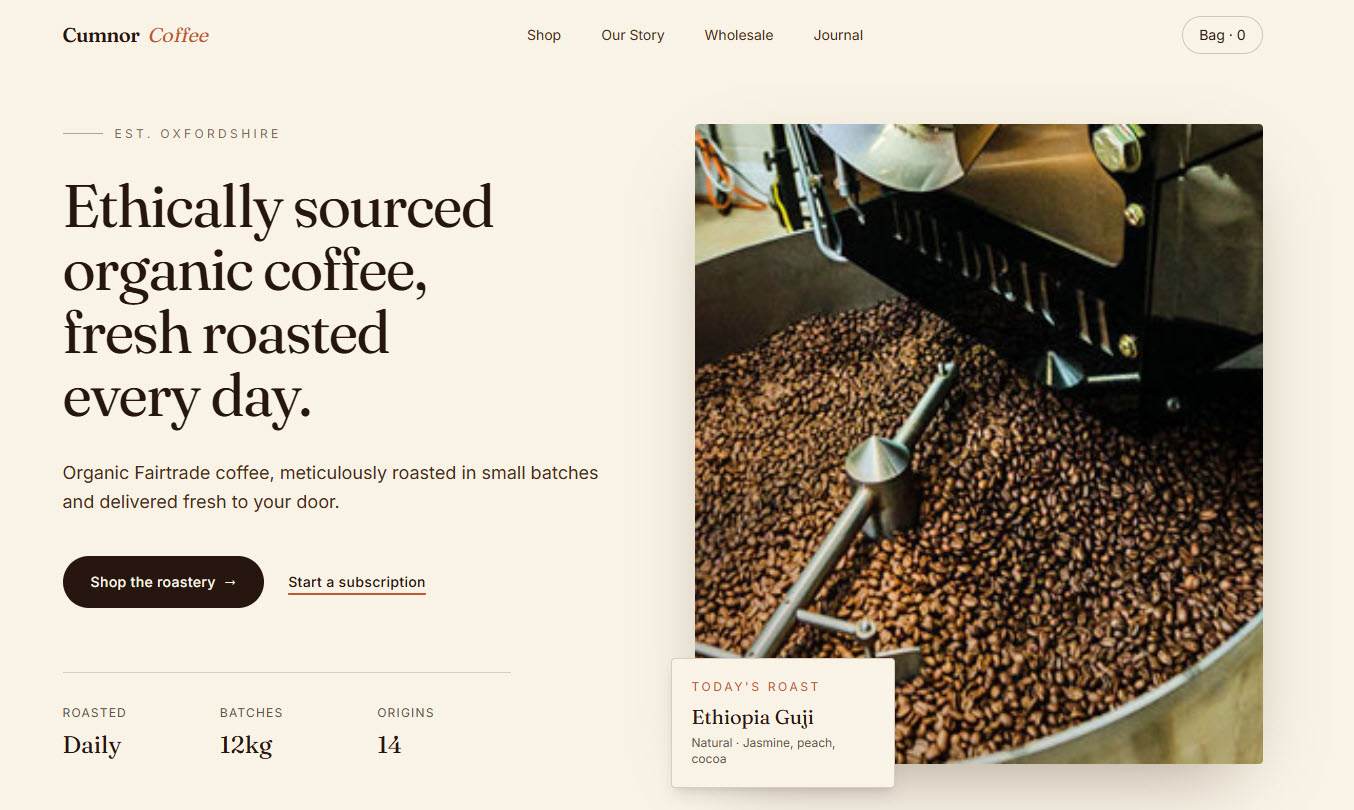
Imagine a visitor arriving at your home page and seeing your brand for the very first time.
Better still, check your analytics and see how first-time visitors behave after viewing your home page. How long do they stay there? How many click through to other pages? How many leave after just a few seconds?
One thing you’ll notice when you look at the data is how differently first-time visitors behave compared to returning customers who are coming back to try a different coffee, or maybe to adjust their subscription settings.
Returning buyers are relatively easy to write and design for because they’re familiar with your website. They know their way around, and know where to find what they want.
More important still, they’ve already tasted your coffee. If they like it, they’re highly motivated to come back and buy again, or try something new.
It’s those first-time visitors, the people who have never tasted your coffee, who are the real challenge.
First-time visitors are the hardest group to reach, engage with, and convert.
What do first-time visitors see and read on the first screen of your home page?
What do you say that makes your visitors think, “Hey, this is different. This feels like my kind of coffee place”?
And no, it doesn’t count if you make claims about quality, freshness, ethical sourcing and craft. It doesn’t count, because all your competitors are saying the same things. (For the data on that, download a copy of our Sameness Report.)
The danger of using your homepage as a soapbox to talk about what YOU want to say.
During the design stage of creating or updating your website, someone – maybe your web developer – asked, “What do you want to say on the homepage?”
Wrong question. It shouldn’t be about what you want to say.
The better question is, “What do you want your first-time visitors to know and feel after seeing your homepage?”
Focusing on what you want to say is easy. Focusing on what your first-time visitors want to hear is entirely different, and a great deal harder.
Step one is to know who your best prospects are. If you don’t know who they are, how can you possibly know what to say?
Step two is to understand what they’re looking for. Why did they come to your site?
Step three is to figure out what messaging is most likely to resonate with them. And no, you’re not going to set yourself apart by talking about quality, freshness, ethical sourcing and craft. Those are the claims they encountered on the last five websites they visited.
Step four is to recognize that your only true points of difference can be found in your stories. Your Founder Story, your Origin Story, your Employee Stories, your Customer Stories, and your Stories About Struggle are unique to your business.
The power of story.
Nobody remembers claims or facts. But we all remember stories. Stories reach us at a deep emotional level. They make us laugh and cry, feel happy and sad.
That’s why we read our children stories at bedtime, why we read books, why we go to the movies, and yes, why we share stories with friends over coffee. We enjoy that emotional engagement that only stories can deliver.
In the world of coffee, while a familiar list of “good reasons to buy” simply reaches the rational brain, a good story touches people’s hearts, and pulls the emotional triggers that result in deep engagement and, ultimately, more sales.
As a copywriter, I’ve been selling with stories for decades. This is one of the core skills I bring to Bean & Brand. This is how I help specialty coffee companies build home pages that make first-time visitors stop and explore, sign up, and buy.
Before you go, be sure to download a copy of the Sameness Report – A Language Audit of 50 Specialty Coffee Websites.