
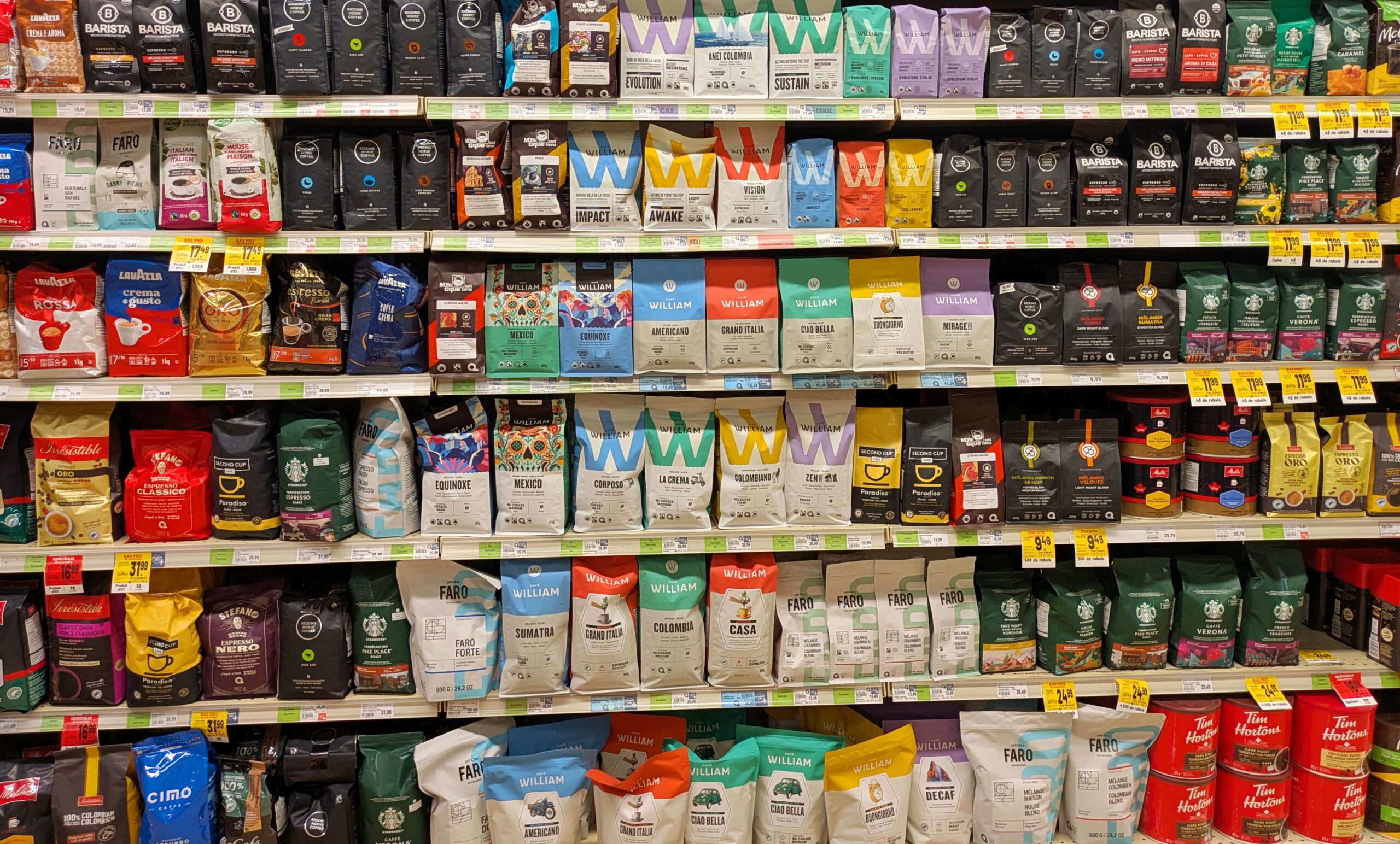
One of the challenges you face when selling specialty coffee is that your coffee beans look the same as everyone else’s. They’re coffee beans.
This means you don’t have the advantage of being able to design your product so it stands out from the crowd, in the same way Porsche might design a car to stand apart from a car made by Volvo.
So… if your product looks exactly the same as everyone else’s, how can you differentiate your coffee? How can you make it stand apart?
The paradox of a crowded premium market
What most specialty coffee roasters do is they fall back on description. They talk about sustainability, about quality, about origin and terroir. They talk about Fair Trade and supporting farmers. They talk about their passion for the craft of roasting.
The trouble is, your competitors say almost exactly the same things. The same claims, using the same phrases.
The beans look the same. And now the marketing messaging sounds the same.
So what else can you do? Spruce up your packaging design? You can, but the best designs quickly get copied as well.
“Let’s make our packaging way more bright and colorful!”
“Dang it, everyone else is doing the same.”
What can you talk about and share that isn’t the same and can’t be copied?
The secret to differentiation is to tell your story.
Your story is unique.
If I asked you to tell me your origin story as a roaster or other specialty coffee company, what would you say? What story would you tell?
Maybe it’s a story of friendship. You and an old friend, fulfilling your dream to open a coffee shop and roast your own beans.
Maybe your story sprang from a trip overseas where you unexpectedly found yourself visiting a coffee farm for the first time.
Maybe it’s the story of your local neighborhood and community. Maybe your parents or grandparents always had a store in this part of town, and you are following the family tradition.
Every coffee business has its own founding story. And your story will never be identical to that of your competitors.
Of course, founding stories are not the only type. You probably have some interesting employee stories, customer stories, and stories about times when things went dramatically wrong, or dramatically right.
Stories lie at the core of your opportunity to differentiate yourself from your competitors.
You’re all selling coffee beans, you’re all selling the coffee experience, and you’re all using much the same language.
But your story is unique. And when you lead with your story, you finally get to differentiate yourself in the eyes of your customers.
You already tell your story? But where?
When I talk about this with coffee roasters who have websites, they will often say to me, “Hey, we do tell our story.”
But where do they tell the story? It’s almost always on the About page. In other words, it’s hidden.
If you use Google Analytics or similar visitor tracking software, you can look for yourself and see, for every 100 people who come to your homepage, how many go to your About page and stay long enough to read your story.
I’m guessing it will be about 5%, or 2%.
In other words, you’re not sharing your story at all. You’re hiding your story.
If you want to use story as a point of differentiation, you need to share it more widely; on your homepage, blog posts and social media updates.
For help in finding the right story, and how to tell it well, and in the right places… that’s the focus of my work at Bean & Brand.
NOTE: If you’re a specialty coffee roaster, and would like me to run a custom language audit on your website, get started here.