
In my last post, I wrote about how the secret to differentiating your business from the competition is to tell your unique story.
Every business has its own founder story, origin story, employee and customer stories, and more.
In this post, I want to show you what I mean.
For the purposes of this demonstration, I’ve invented a website called haywardscoffee.com. This website doesn’t actually exist. I’ve just created a prototype of its home page and a couple of interior article pages.
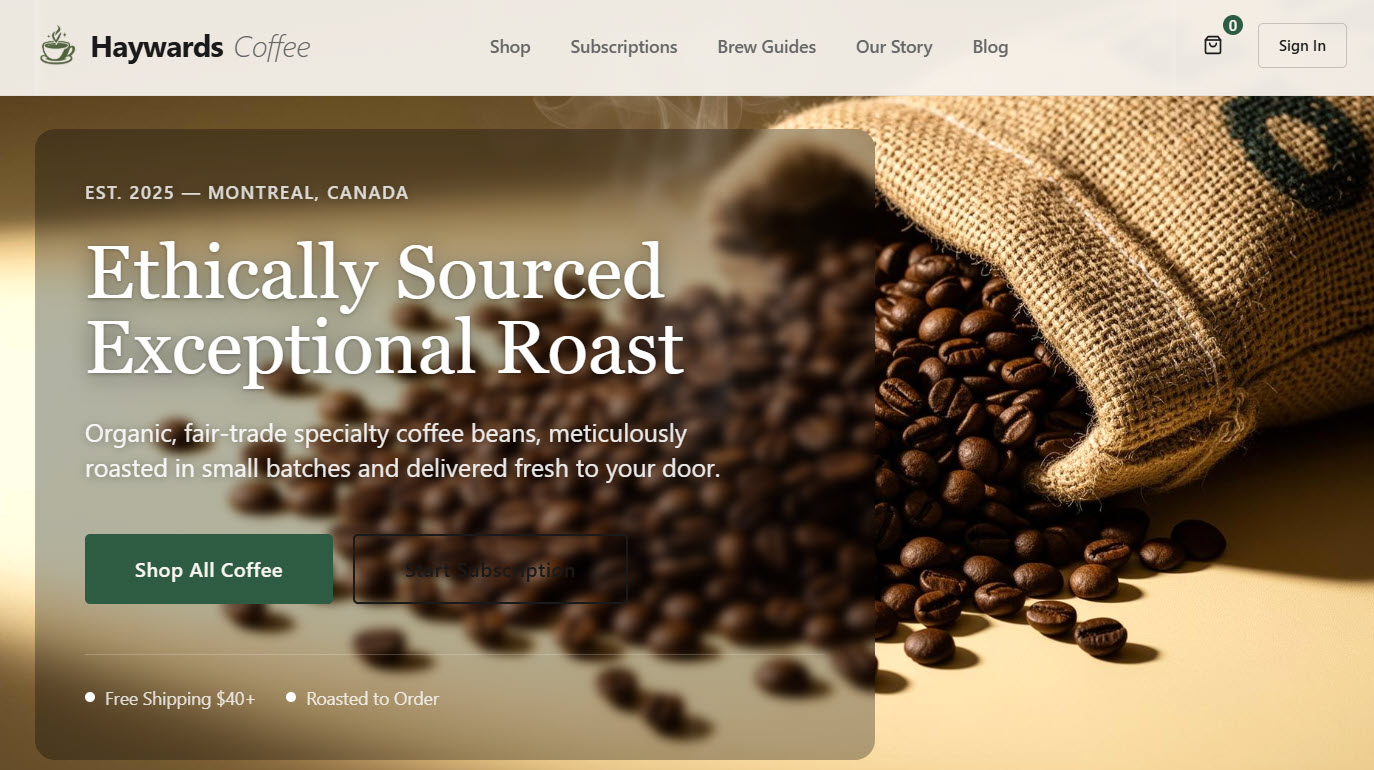
Let’s start with that image above.
It’s a typical first screen of a coffee business website. The image is predictable, as are the headline and subhead.
If you look at that subhead in particular, it’s a good example of how generic coffee messaging can become. Versions of that exact promise can be found on a multitude of coffee roaster and coffee store websites.
Now let’s go inside the site and view an article by the folks at Haywards Coffee.
This is the “before story” version.
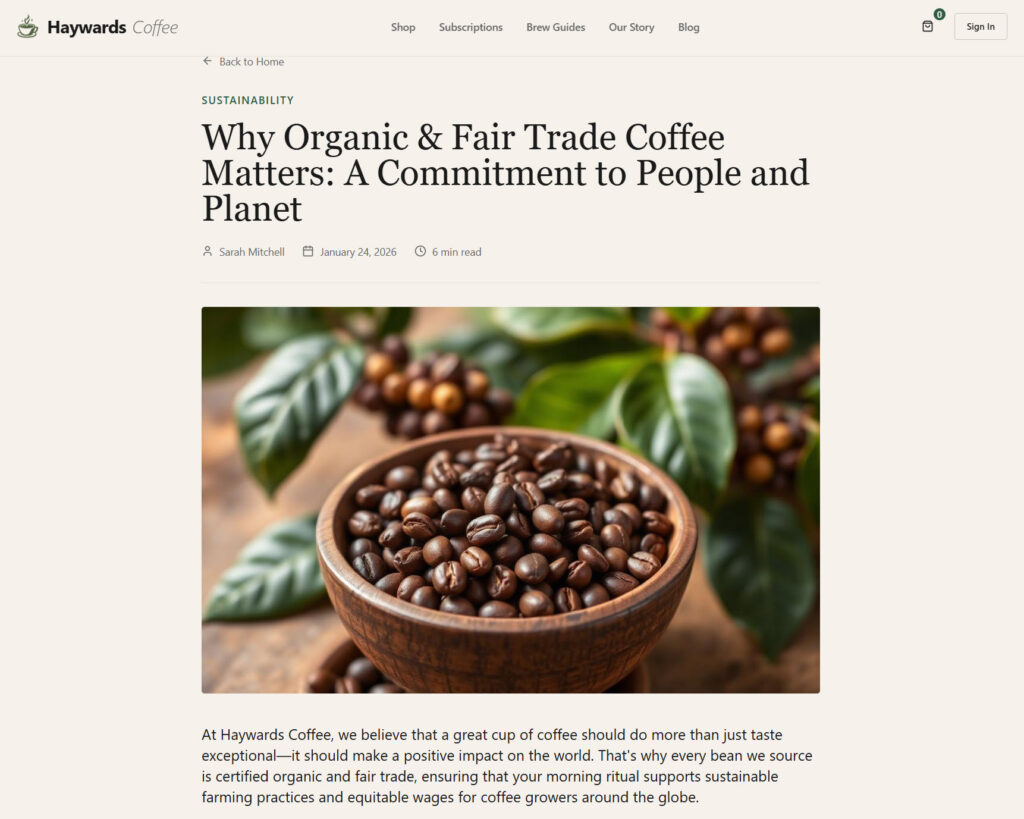
At first sight, there’s absolutely nothing wrong with this. It’s saying all the right things. The image is attractive. The claim and promise make sense. We want our coffee company to be committed to people and the planet in a positive way.
The weakness here is not in what Haywards Coffee is saying. The weakness is the same as we saw on the home page. The message is generic. It’s what everyone says.
In fact, you could remove the Haywards Coffee logo from the top left and replace it with logos from dozens of other websites, and it would still work.
The point being, there is no advantage to saying the right thing if it’s exactly the same as what all your competitors are saying.
Now let’s look at the “after story” version.
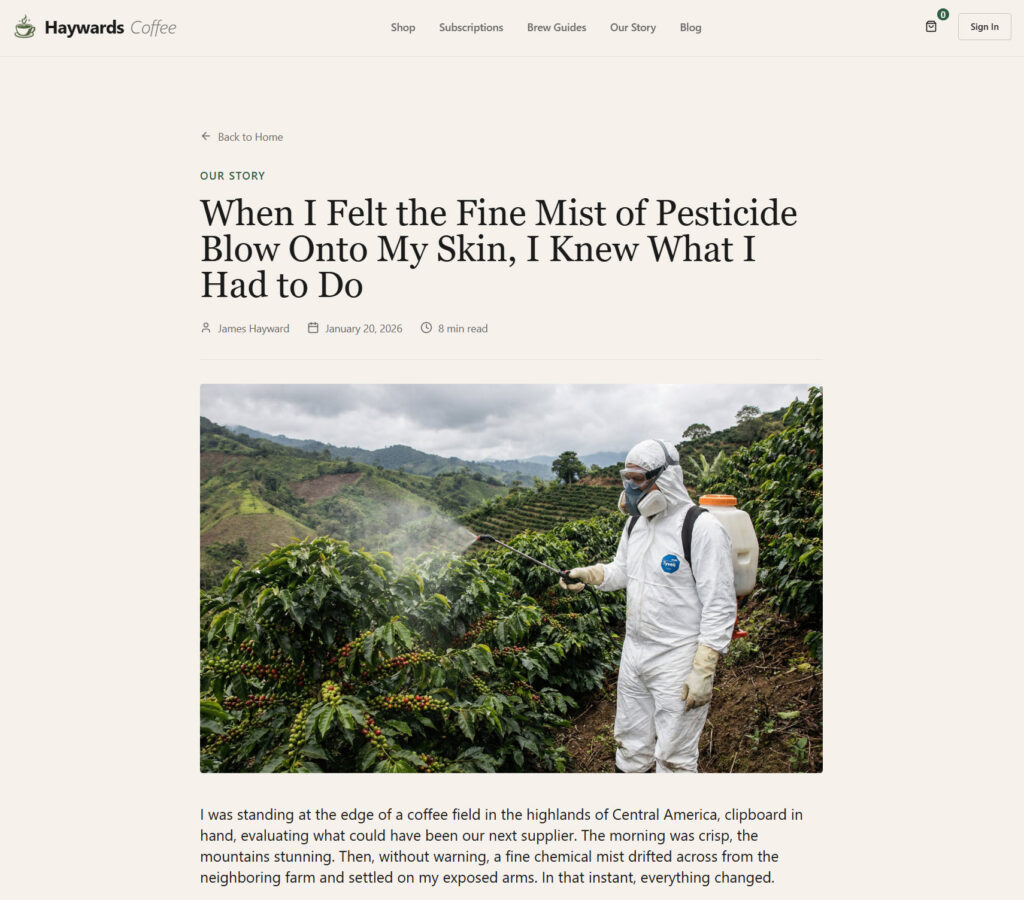
In this version, one of the founders is sharing a very specific moment in their journey.
This is a unique story. It’s a foundational story. It’s a story that deeply influenced the direction the company chose to take.
It is based not on description or generic claims, but on authentic lived experience.
In other words, this company’s messaging is unique. There’s nothing generic here. If we apply the “logo test” and try replacing the Haywards Coffee logo at the top left with some other company, it would no longer work, because it would no longer be true.
Does every coffee company have a story like this? I believe they do. But very often, these stories are buried and forgotten. If you think about this pesticide story, it could quite easily have been shrugged off and forgotten.
This is why my process at Bean & Brand begins with Story Discovery. It’s an almost archaeological process of going back through the history of your company and finding a story or stories that can make a profound difference in how people perceive your company.
Your story isn’t just for your prospects and customers. It can also impact your entire company culture.
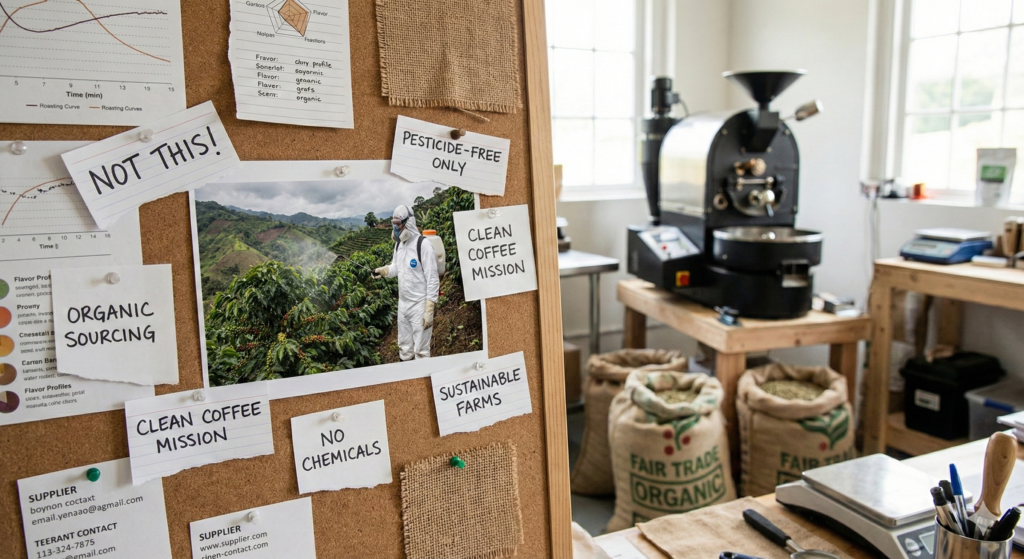
When you have a story that resonates with your customers, it can also become the glue that holds your employees together.
A mission statement is one thing. Sure, you can pin it on a corkboard. But does it really mean anything to the employees who walk past it? Probably not. Most mission statements just sound like one more piece of corporate blah blah blah.
But a story—a true, lived story—that’s different. That’s a truth your employees can stand behind and work toward.
In other words, whether your messaging is facing outward or inward, the sharing of a story can become an immediate and profound differentiator.
NOTE: If you’re a specialty coffee roaster, and would like me to run a custom language audit on your website, get started here.