
I talk a lot about finding the stories that define you as a specialty coffee business. And I talk about using those stories to differentiate your business from competing brands.
When I talk about stories, people often assume I mean origin stories, founder stories, employee stories, or stories around consequential events in the growth of your business. But that’s not the case. There is a lot of “sameness” about origin and founder stories across most specialty coffee brands.
What I’m talking about is a whole different set of stories, and these are defined primarily not by you, but by your customers.
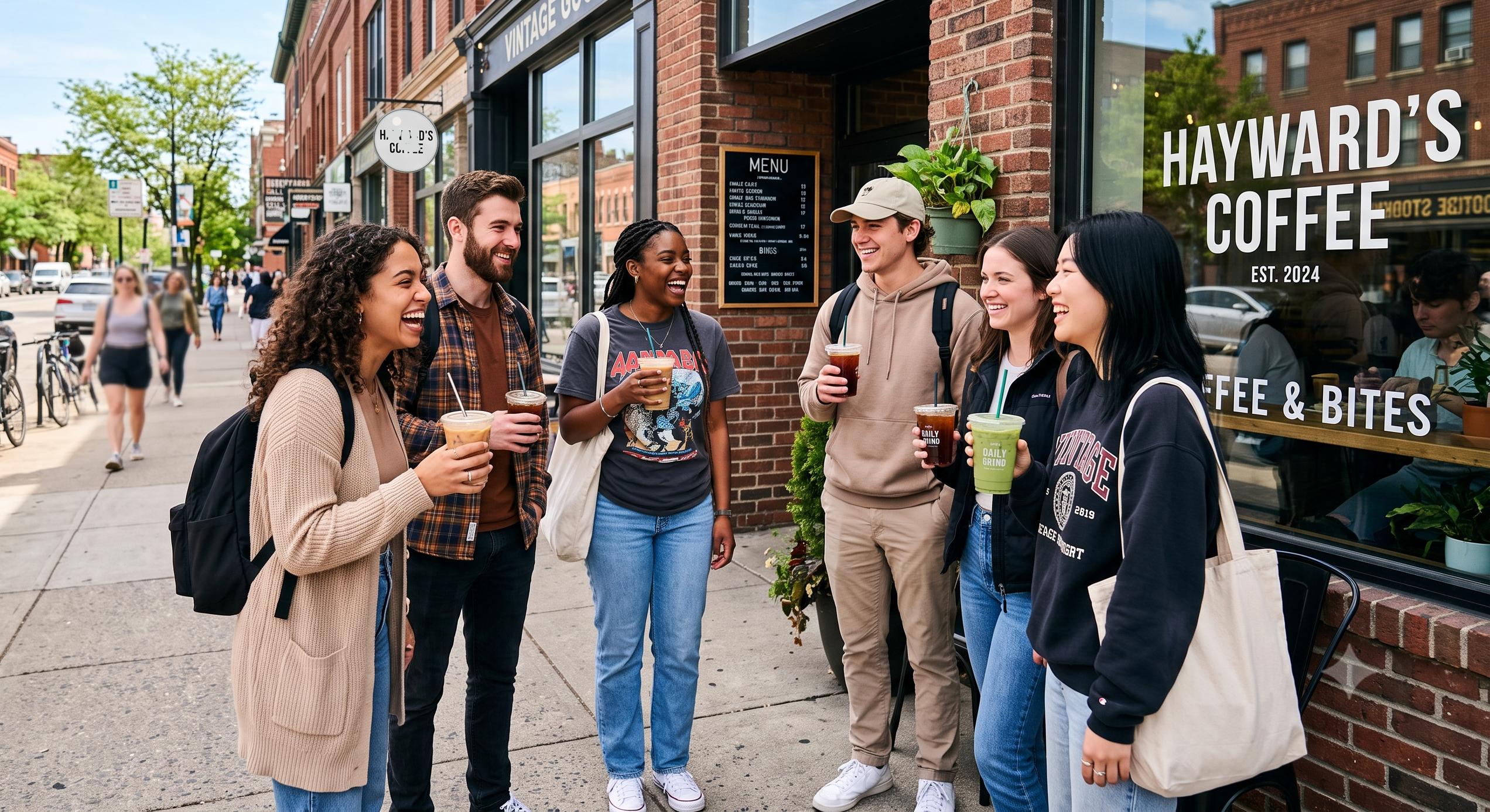
Imagine a Gen Z coffee drinker creating a short TikTok video holding up an iced latte. She’s telling a story about where she lives in the world of coffee.
The same is true for the coffee nerd who shows off his beautiful new home coffee station on Reddit. He’s saying, “I belong to the upper echelons of specialty coffee. This is my tribe.”
Both are using coffee to tell a story about themselves.
“This is where I belong.”
This is why knowing who you’re selling to comes first.
If you’re selling to third-wave enthusiasts, you won’t be telling them stories about iced vanilla lattes and transparent plastic cups. Or, perish the thought, ready-to-drink cans of coffee drinks.
Likewise, if your audience is Gen Z and Gen Alpha, you’ll be missing the mark if you tell third-wave stories about origin, processing and roast.
This younger audience is particularly sensitive to what their brand choices say about them.
The Keurig Dr Pepper’s 2026 State of Beverages report found that 58% of Gen Z and Gen Alpha consumers say their drink choice reflects who they are — compared with 41% of Millennials and older. The same research found they are twice as likely to choose a brand specifically because of what it signals about them.
More telling… 63% say what they see friends and creators drinking directly influences their own choices, against 48% for older generations.
Welcome to Social Identity Theory.
Social identity theory, well established long before TikTok existed, holds that people derive a meaningful part of their self-concept from the groups they belong to.
Consumers treat brands used by groups they belong to, or aspire to belong to, as extensions of themselves.
Erewhon didn’t become a cultural object by selling better groceries. Stanley didn’t sell out of tumblers because of thermal performance. In both cases, people bought them as a way to say, “This is who I am. These are my people.”
The uncomfortable part of defining your stories
Thousands of specialty coffee companies are deeply invested in third-wave stories.
These are the stories about washed versus natural process, the roast date on the bag, the V60 on the counter, and the phrase “we don’t do dark roast.”
If this is your audience, go for it. The good news is that this segment is still growing.
But stay consistent. Don’t try to “refresh” your brand by adding RTD coffees to your offerings. Or making your bag design more “modern”.
If Gen Z is your audience, don’t muddy the waters by talking about floral notes in their iced coffees.
Piggyback on the stories your prospects are already sharing
The thirty-second TikTok video is a story told by a buyer and a fan, seeking to influence others. They want to spread the word to others in their tribe.
The YouTube video on how to make the perfect pour-over is a story told and shared by a third-wave fan.
Find the tribe you are best positioned to serve.
Then, in your own positioning and messaging, reflect back to them the stories that say, “Your tribe lives here.”